
NDIS Perth
The National Disability Insurance Scheme (NDIS) is a scheme that provides funding and support to Australians who have permanent disabilities and living impairments. At Compass Care Group, we take an in-depth look at the NDIS, for participants to better understand their options.
-
What is the NDIS?
The NDIS is an Australian scheme that gives people with permanent disabilities the opportunity to live more independent lives. It provides funding and support for those who have what is defined as a significant physical or mental disability, challenge as well as intellectual impairment. The NDIS provides financial assistance to those who’s impairment prevents them from carrying out day-to-day activities. Eligible individuals can vary greatly depending on the severity of their disabilities, with this determining what funds are granted by NDIA (NDIS).

-

NDIS- what does it mean?
N – National
A scheme accessible and available Australia-wide, The NDIS is national.
D – Disability
Support through the NDIS is provided to individuals in Australia who live with an intellectual, physical, sensory, cognitive and psychosocial disability. Furthermore, early intervention supports is also available for eligible people with disability or children with developmental delay.
I – Insurance
As an added peace of mind, the NDIS has insurances in place to ensure that those born or impacted by a significant disability or impairment will get the support they need.
S – Scheme
Not set up as a welfare system. the NDIS is designed with longevity in mind, helping people get the support they need so their skills, and independence improve over time.
-
What does the NDIS do?
According to https://www.ndis.gov.au, National Disability Insurance Agency (NDIA) is an independent statutory agency. NDIS role is to implement the National Disability Insurance Scheme (NDIS), which will support a better life for hundreds of thousands of Australians with a significant and permanent disability and their families and carers.
The NDIS is an innovative new disability scheme and solution that will revolutionise how we deliver the needs of those who are differently abled. For years, Australia has been stuck in an outdated system where people with disabilities were given block funding from agencies or community organisations. Now, they’ll be able to receive their necessary supports straight away through one single program: The National Disability Insurance Scheme (NDIS). With more than 4 million Australians living. The NDIS also provides people with disability, including those not eligible for funding, with information and connections to services in their communities.
This includes connections to doctors, sporting clubs, support groups, libraries and schools, as well as providing information about what support is provided by each state and territory government.

-
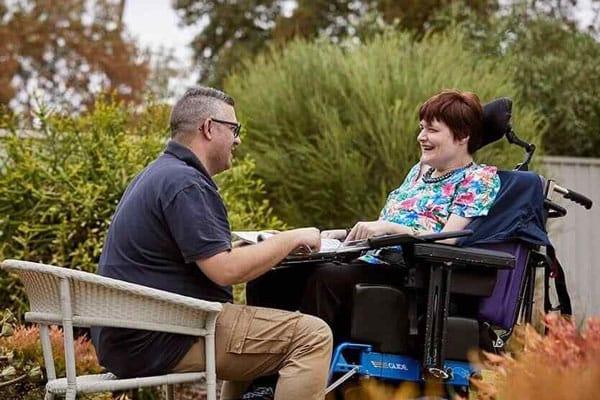
Who is eligible to apply for the NDIS?
A set framework, guided by the NDIS, this scheme has strict guidelines on who is eligible to access the funding available to participants. The scheme says that you must be…
- An Australian citizen
- Below 65 years of age
- Live with a permanent, lifelong disability that prevents you from independence, including the ability to do everyday tasks
- Using special equipment due to you permanent and significant disability
While those who suffer from progressive neurological diseases may think they aren’t eligible for the scheme, it would be advisable to go through the criteria list to ensure you are eligible. Some patients may need early intervention access to the NDIS if they have evidence that getting support now will help them reduce their support needs in the future.
It is also important to note that some patients may be eligible if they need physical or mental support to carry out their daily tasks.
Chat to the team at Compass Care Group for us to help you understand your eligibility today.
-
How to apply for the NDIS?
To access the NDIS in Western Australia, you will need to complete an application. Once your paperwork has been submitted it can take up two weeks for approval or rejection by email unless there are any issues with eligibility status on behalf of yourself, which would require more stringent conditions before they allow participation within the scheme.

-
What will I need to provide in my application?
Firstly, you will need to make an access request. You can do this by calling the NDIS on 1800 800 110 to make an access request or you can complete and submit the access request form via email.
Secondly, as part of the access request process, you will be asked:
- To confirm your identity and/or a person’s authority to act on your behalf
- To answer questions to see if you meet the NDIS access requirements (age, residence and disability)
- Questions about providing consent to enter the NDIS and about seeking information from third parties.
When providing details and reports about your medical records, you can either submit reports provided by your physician or provide permission for the NDIA to talk to other people about your disability, including your local
doctor or a person providing support to you.
When you apply, the NDIA will send you a letter asking for any further evidence, if required.
For this, you can ask your treating health professional to complete the Supporting Evidence Form available
at ndis.gov.au Be sure to send your evidence to the NDIA via email, NAT@ndis.gov.au or mail, GPO Box 700, Canberra, ACT 2601. Alternatively, you can provide it in-person by taking it to your local office. We advise you keep a copy of your evidence for your own records.
Be sure to also provide details and evidence about your disability and how it impacts you each day.
If you need any help in going through the application process, do not hesitate to contact us, we are NDIS professionals who can help you.
-

Which support and services are funded by the NDIS?
The following are inclusive but not limiting:
- Help with household tasks to allow the participant to maintain their home environment
- Help to a participant by skilled personnel in aids or equipment assessment, set up and training
- Home modification design and construction
- Mobility equipment, and vehicle modifications
- Day-to-day personal activities
- Transport to enable participation in community, social, economic and daily life activities
- Workplace help to allow a participant to successfully get or keep employment in the open or supported labour market
- Therapeutic supports including behaviour support
-
What if I need help to apply for the NDIS?
After reviewing the criteria, if you are eligible for an NDIS plan, you can have a conversation with us to learn about your current situation, supports, and goals to help develop your plan.
Someone from the NDIA will be required to review and approve your plan. Chat to our team at Compass Care Group today, we will go through the right measures to see you have a successful application, if you are eligible to receive the NDIS funding you rightfully deserve.

-

Which support and services are funded by the public health systems?
Services provided by the WA Government include,
- Access to public hospitals
- Access to mental health services
- Access to general dental health services
- Access to population health services
- Access to community health centres, and health promotion services.
-
What NDIS and other government services responsible for?
Other government services to help alleviate day-to-day necessities for Australians who live with a disability. We have curated a list of supports the NDIS will and will not fund, to help you better understand what the government will help you with. We have separated this section into education, health, employment and family support.
Education
What will NDIS likely to fund? Or What NDIS is responsible for?
- Offering self-care at school with all aspects related to the student’s disability.
- Specialised training of school staff to better equip them to attend to the specific needs of the student with a disability.
- Transport supports to help with the student’s disability.
- Transportable equipment such as a wheelchair or personal communication devices.
- Delivery of therapies that come other the bracket of non-education that a family and school have agreed may be delivered during educational hours at school.
Education systems fund – What supports NDIS would not fund?
- The actual teachers, educational assistants and other educational assistance like AUSLAN workers.
- The general and main-stream support, resources and training for teachers, tutors and other staff that do not fall under the bracket of disability.
- The allied health practitioners that deliver therapy schools for educational purposes.
- Any assistance, aids and equipment to make the educational curriculum accessible to all students This can include modified computer hardware,software and braille textbooks.
- Adjustments to buildings such as ramps, lifts and hearing loops.
- The transportation required to deliver educational or training activities such as school field trips, excursions and sport carnivals.
- The daily supervision of students at school.
Health
What will NDIS likely to fund? Or What NDIS is responsible for?
- The necessary home modifications, personal care and development of skills to assist in your independence.
- Any allied health and outlined therapies that are needed because of your disability.
- The actual prosthetics and artificial limbs to enable your independence.
- Assistive technology like wheelchairs, adjustable beds or hearing aids to enable independence.
- Various therapeutic and behavioral supports for people with psycho social disability.
Public health systems fund- What supports NDIS would not fund?
- The actual diagnosis and official medical assessment of health conditions, that encompass mental health and disabilities.
- The prescription of medication. This can include, general medical and dental services and treatment, specialist services, hospital care, surgery and rehabilitation.
- All-inclusive clinical care for mental health conditions, palliative care, geriatric and psychogeriatric services.
- Nursing services delivered for all sub-acute, rehabilitation and post-acute care.
- Transitional services from hospital back to home, and vice-versa.
- Hearing, and vision services that an individual needs help in, and is not part of the person’s general disability.
Employment
What will NDIS likely to fund? Or What NDIS is responsible for?
- The personal care needs that enables a participant to participate in their profession.
- The necessary aids, assistance and equipment such as wheelchairs or personal communication devices to enables a participant to work.
- The transitional needs that can be expected for a person living with a disability, that is beyond what is reasonable for an employer to provide.
- Supports in individual and group-based capacity building to assist participants to build work confidence and essential work skills. This falls outside what is reasonable for an employer to provide.
- Keeping a participant’s skill’s sharp, the NDIS provides ongoing on-the-job support where a participant is likely to need higher intensity or more frequent supports in the workplace.
Employers and employment services fund – What supports NDIS would not fund?
- Access and support by agency bodies like Disability Employment Services or Job-Active, to help with getting participant’s job ready.
- Workplace-specific supports including building modifications, employment-specific aids and equipment such as computers and modified desks.
- The transport of a participant to meet workplace KPIs and activities, such as attending work meetings or making work appointments.
Family Support
What will NDIS likely to fund? Or What NDIS is responsible for?
- Disability-specific supports and training programs needed because of the impact of a child or parent’s disability.
- Out-of-home care for children, teenagers and adults needing disability support. These can include, home modifications, equipment, therapies and behavioral support, and the development building activities to grow a child’s independence.
Community and government family services fund – What supports NDIS would not fund?
- Any child protection issues, as expected for children without a disability.
- Education through providing information and awareness to the community regarding child safety and well being.
- The necessary counselling, parenting skills programs and family relationship services are made accessible to the participant(s).
- Out-of-home care for children, teenagers and adults–including housing, care allowances, payments and other standard supports to sustain the arrangements.
- Family Tax Benefit or Child Care Rebates, and any other family tax benefits.
-
Choosing the Right NDIS Provider in Perth
With hundreds of NDIS-registered providers in Perth, picking the right one can be tough. Here’s what to look for:
- NDIS Registration – Ensure the provider is registered with the NDIS.
- Local Expertise – Perth-based providers understand regional challenges and resources.
- Customised Support – Every participant has different needs—your provider should tailor their services to you.
- Positive Reviews & Recommendations – Check Google reviews, testimonials, and ask for feedback from other NDIS participants.
Did You Know? Over 85% of NDIS participants who work with a Support Coordinator report better access to the services they need.
-
NDIS and Mental Health Support in Perth
The NDIS isn’t just for physical disabilities—it also provides funding for people with psychosocial disabilities caused by long-term mental health conditions.
How does NDIS support mental health?
- Access to psychologists and counselling services.
- Support workers for daily living assistance.
- Community engagement programs to build confidence and reduce isolation.
Stats to Know:
- Around 9% of NDIS participants in WA receive funding for mental health support.
- Studies show that NDIS participants with psychosocial disabilities experience a 40% improvement in quality of life when they receive structured support.
Did You Know? If you have a diagnosed mental health condition affecting daily life, you may be eligible for NDIS funding even if you’re already accessing Medicare’s mental health services.
FAQ’s regarding the NDIS
What are the top five benefits of the NDIS in Australia?
There are many benefits that the NDIS provide Australians living with a disability or permanent impairment. We have listed 5 primary benefits that are offered to those who acquire the scheme.
- Provide life skills development
- Assistance in life-changing transition
- Supported independent living
- Assistance in daily activities
- Assistance with social and community participation
What support and services can the NDIS fund?
From employment, education, life skills development, community and social participation, living arrangements, health, well being and transport – the NDIS can fund aspects of your life that require additional support to gain independence.
How does the NDIS support families and carers?
Although the NDIS primarily supports the participant who lives with a permanent and significant disability, their NDIS-funded supports and services may also directly or indirectly benefit a participant’s family and carer.
As a carer or a family member can fulfill duties that a professional support worker otherwise achieves, the NDIS acknowledges that support towards families and carers can therefore be provided as they are often one of the greatest advocates for people with disabilities.
Additionally, there are programs available to carers to facilitate respite
What is a permanent and significant disability?
A permanent and significant disability means a disability is likely to be lifelong and substantially impacts a person’s ability to complete everyday activities.
What is defined by reasonable and necessary support?
- Must be related to your permanent disability
- Must not include day-to-day living costs unrelated to your disability support needs, such as groceries
- Should represent value for money
- Must be likely to be effective and work for you
- Should take into account support given to you by other government services, your family, carers, networks and the community.
What supports are the NDIS UNABLE to fund?
- Activities and supports that fall under the responsibility of another government system or community service
- Aspects of service that are NOT related to a person’s disability
- Relates to day-to-day living costs that are not related to a participant’s support needs, oris likely to cause harm to the participant or pose a risk to others
Is the NDIS linked to the Disability Support Pension?
No. If you are receiving the Disability Support Pension (DSP), this does not mean that your income will automatically be supported by NDIS funds. You must still check whether it is possible to apply for the funding. Please note, there might already be other sources providing similar benefits in some cases, such as carer’s allowances. Similarly, if someone else has applied on behalf of an individual who gets support from both DSP And NDIS then he/she would have been eligible provided they meet certain criteria.
Does the NDIS replace other government and community services?
No. Various government and community services hold responsibilities for providing assistance to all Australians and ensuring their services are inclusive and accessible for people with disability.
Those living with a disability need other government services that encompass access to local councils, hospitals, libraries, health centres, public transport or schools. Whereas when looking at community services and activities, they can include community groups, sporting clubs and charities within your local community.
If I am receiving compensation payments. Will this affect my access to the NDIS?
No. Compensation for a personal injury will not affect your eligibility to access the NDIS. However, if you are receiving payments or have done so in the past, then it is possible that any funding relating-to this claim may come out of what was originally planned by an individual’s employer through the NDIA. The organisation could also make adjustments on behalf of those individuals’ claims once they receive them which would account both sides: those who received injuries themselves as well all other related costs such.
- The National Disability Insurance Agency
The NDIS is run by an independent government organisation known as the National Disability Insurance Agency (NDIA). The eligibility of someone becoming an NDIS participant is reliant on the approval made by the NDIA. It also decides how much funding the participant is entitled to receive.
These decisions are based on legislation called the National Disability Insurance Scheme Act 2013 which sets out:
- The eligibility requirements every NDIS participant must meet
- What supports and services are considered reasonable and necessary for the NDIS to fund.
- Partners in the community
There are community-based organisations who work with the NDIA to deliver the NDIS. These community-based organisations are called ‘partners. These partners provide Early Childhood Intervention (ECI) or Local Area Coordination. There are also some organisations in the community that provide both.
- Partners of Early Childhood Approach (ECA)
Local organisations that deliver the early childhood approach are known as early childhood partners. Our early childhood partners have teams of professionals with experience and clinical expertise in working with young children with development delay or disability and their families.
- Local Area Coordinators (LAC)
An LAC is the conduit between a participant and the services within the community. They will connect people with disability to supports, services and various activities within their community and other government services. On the other hand, LACs work in communities to help them become more accessible for participants reliant on the NDIS.
What is NDIS?
National Disability Insurance Scheme (NDIS) is the first national scheme in Australia for people with disability. The Australian Government established the National Disability Insurance Agency (NDIA), an independent statutory agency. It supports a more promising life for thousands of Australians with substantial and permanent disability and their families and professions.
At present, Australia has around 4.3 million disabled people. The NDIS provides funding to eligible people with disabilities to be a part of the community, have greater independence, access new skills, volunteer in their community, and achieve desired goals.
NDIS is available for eligible Australians to get the preferred support they choose. The scheme believes in improving the quality of life of disabled people. It puts them in the centre of decision-making through appropriate and essential support, individual preference, and authority.
What type of support can't be funded or provided under the NDIS?
It is well-documented what the NDIS covers for Australian people living with a disability. But there are certain things that the scheme cannot support. Here we can help you to understand the limitations of funding.
- It directly supports only people with disabilities. Using funding efficiently and effectively to meet your specific requirements and goals is essential.
- It does not support your daily living cost like groceries, rent, mortgage or utilities (gas, electric, internet etc.). The fund is solely related to disability needs. However, there are instances of funding for living costs that arise due to disability.
- As the scheme operates within the framework of Australian Laws and Regulations, it does not support any illegal or irrelevant requirements which are not considered legitimate under these laws.
- The utmost priority of the scheme is to prioritize your safety and well-being. Any potential cause that may harm you or others that may not be supported.
- It cannot duplicate other supports provided by the NDIS under alternating funding.
What does the NDIS do?
NDIS reshapes how people with disabilities access the support they need to attain their objectives and participate comprehensively in community life. It supports people with permanent and considerable disabilities impacting their everyday lives and activities. It could comprise greater freedom, societal involvement, education, occupation, health and well-being.
- It supports people with permanent and significant disabilities that affect their everyday activities.
- It provides a more excellent choice and control over when, where and how their support is provided, and gives certainty in receiving the support they need over their lifetime.
- It concentrates on early intervention, where getting early support can diminish the effect of disability.
- It helps people with a psychological disability. People with permanent functional impairment related to mental health issues can access support at their convenience from NDIS.
What is reasonable and necessary support?
NDIS provides reasonable and necessary support for a person with a disability and helps them live an ordinary life and attain their objectives. Before getting the related fund, a planner will talk to the person who wants to have the scheme and assess if the support request:
- Related to Disability
- Likely to be adequate and helpful for the person
- Not a mainstream cost that is irrelevant to the disability support
The spectrum of support and services offered by the NDIS scheme is education, independence, living layouts, social participation, health and well-being.
To be considered reasonable and necessary, support or service must be related to the following:
- Must be connected to a participant’s disability – There should be proper documents in support of the disability of the person who is participating.
- It should represent value for money – The scheme considers the cost and benefit of the support and the cost and use of the alternative support.
- It should assist you in pursuing your goal plans – There should be a clear view that the program will help you pursue your future objectives, goals and aspirations.
- It should assist you in undertaking activities – The support will help you to do activities by making participation in social and economic life more manageable. Social participation means going out with friends, going to school or going for medical appointments. Economic participation includes getting or keeping a job, volunteering, studying or learning new skills.
- Support should be practical and beneficial – It needs to be considered that the support should be effective and beneficial for the participant with current good practices. Effective or practical means it will do what you need; beneficial means the support will help you do things you cannot otherwise do.
- Support available for the participant and people related to the person – The scheme needs to consider reasonable support for the expected families, carers, and community.
- NDIS and other services fund support – The support is more appropriately funded by NDIS and provided through other general service delivery systems, support services, persons, agencies or bodies.
Who is helping deliver NDIS?
Every NDIS participant has a personal plan that documents their desired outcomes, the supports they will utilize and the funding they have obtained.
The scheme’s registered providers are the participants’ primary contact points. They help the participants to get support and services which are considered to be reasonable and necessary.
While registering for NDIS, the providers choose the particular registration groups (linked to the type of services) to apply for. They might demonstrate whether the participant met the specific quality and safeguard requirements.
Early Childhood Partner
- Early Childhood Partners deliver the early childhood approach that helps younger children under 6 with a developmental delay or younger children under 9 with a disability.
- The providers also employ Early Childhood Educators and allied health professionals. They help the children and their families access support and assistance tailored to their requirements and circumstances.
- The providers also enable connection to other suitable supports, such as playgrounds, educational settings and community health services.
Local Area Coordination Partner
The local area coordination partners, and community-based organizations, help deliver services in some parts of Australia.
- They work with people with disabilities aged between 9 to 64. For most people in this age criteria, the Local Area Coordinator will be the main point of contact for the NDIS.
- They support people with disabilities. To work towards their objectives, they build the capacity to make their own decisions according to their preferences and access the support they need to live their desired life.
- They create a more inclusive society and provide improved outcomes for people with disability by coordinating with communities and multiple levels of Government.
Remote Community Connectors
The NDIS connectors are also called the Remote Community Connectors, and they play a crucial role in helping to deliver NDIS to remote and extremely remote communities. It includes the First Nation people with disabilities. They also help to provide for people from culturally and linguistically diverse environments.
They work in remote places to improve the life and livelihood of people with disabilities and their families and communities.
They support the diverse cultures and unique approaches needed for these communities.
Am I eligible for NDIS?
Once the applicants submit all the information to avail of the NDIS, the application is reviewed and decided for eligibility. The person’s identity is also checked as a part of the process. To be an eligible NDIS fund receiver, you will have to meet the following:
- The Australian citizenship or permanent residential proof and age-proof requirement
- Either the early intervention requirement or the disability requirement.
The other eligibility standards include:
- A participant who is 9 or older meets the disability or early intervention requirement.
- For children under 9, it is the opposite process. First, it is seen if they meet the early intervention and then if they meet disability requirements.
When you are not eligible in the provided criteria:
- Children under six will only be eligible for the early intervention requirement and will not meet the disability requirement.
- Participants won’t be eligible for NDIS if they do not meet either the disability requirement or the early intervention requirement. But the early childhood partner or local area coordinator can help to connect with other Government or community consent
How do I apply for the NDIS?
The NDIS knows that a person wants to avail of the NDIS fund when he applies for the process.
If you are capable of applying, then you have to follow the following procedure:
- Make an eligibility checklist for receiving the support
- Make a verbal application by calling on the number 1800 800 110
- Complete an Access Request Form and produce it to the NDIS
How to make a Verbal Application:
- Call 1800 800 110 to make a verbal application
- They will ask to fill up the identical application as per the form
- They will ask you to verify your identity or the person to act on your behalf
- They will ask questions about providing consent to apply and obtaining information from third parties
How to complete an Access Request form:
- You can download the Access Request Form from the internet.
- Call or email the provider to send the form.
- Collect the form personally from the NDIA office, early childhood partner or local area coordinator.
- You must complete Section 1 and sign the date on the form. If someone else acts on your behalf, provide evidence or your consent through verbal authority or attaching written permission.
- A professional will complete Section 2 with signs and dates to the form.
What do I need to provide when I apply for NDIS?
To become an NDIS participant, there are some requirements you will need to meet to be eligible for the same:
- Provide evidence of your age, Australian citizenship or permanent residential proof
- Proof of the disability or early intervention
- Evidence of disability for children
- Consent to access and use your center-link record.
- Copies of documents or other evidence detailed on your NDIS application form or that you will be asked to provide while applying in person or over the phone.
Who can provide evidence of my impairments?
The National Disability Insurance Agency (NDIA) must determine whether you meet the disability requirements to receive the fund.
To collect the documents, you can work with your treating health professionals, who must be a doctor, specialist, or associated health service provider, to furnish your evidence of disability.
You can request your treating health professional to complete Section 2 of the NDIS application form.
Some of the familiar treating health professionals include:
- General practitioner (GP)
- Occupational therapists
- Paediatrician
- Orthopedic surgeon
- Speech pathologist (therapist)
- Neurologist
- Psychologist
- Psychiatrist
- Physiotherapist
Check whether your treating health professionals are qualified and registered in their practice area within the Australian Health Practitioner Regulation Agency or relevant professional authority.
They must be eligible to provide evidence of your disability and have treated you for a significant period.
What can the NDIS fund?
NDIS can fund the reasonable support you require for your disability if they meet specific benchmarks. They can support your needs related to disability, are practical and beneficial, value for money and most appropriately funded.
The funding is based on individual criteria and different reasonable and necessary decisions, including the support needed for your disability and living arrangements.
Some of the supports that NDIS may fund for the participants are:
- Permanent disability or reasonable disabled condition
- Daily personal activities
- The help of the workplace, which will allow the participant to successfully get or keep employment in the open or supported labor market
- Transport facility to participate in social, community, economic and daily activities of life
- Behavioral and therapeutic supports
- Household task help to allow the participants to maintain their home environment
- Help regarding equipment assessment, set up and training for the participants by the skilled professionals
- Home modifications, design and construction
- Mobility equipment and vehicle construction
How does the NDIS support families and carers?
NDIS helps not only the person with a disability but also their families and carers who care for someone under 65 with a permanent disability.
- The help and support the families and carers provide can be provided by paid support workers and formal services.
- Carers are often the greatest advocates for people with disabilities providing the practical and emotional support to help them live their best life.
- Carers can help the participant to join NDIS, set their goals and use the plan effectively when permitted.
- The NDIS participant might use funding in their plans to facilitate an interval in addition to the government-funded programs.
- A respite gives the participants, families, or disability care providers short breaks from their caring responsibilities. It also provides participants a time away from their families and explores themselves in a new environment.
For a participant, this can be helpful as they can:
- Join a new community.
- Try a short stay out of the home to explore new things, make new friends or develop new skills.
- Get extra personal support while staying at home when the family or caregivers are away for a short period. This also helps the carers to manage and improve their health and well-being.
Is the NDIS linked to the Disability Support Pension?
The Disability Support Pension is a financial help for those with a permanent condition preventing them from working. The disability includes physical, intellectual and psychiatric disorders. This payment comes from the service Australia, known as Centrelink.
What is Mainstream Community Support?
Mainstream aids are the support you can get from Government funded services such as health, mental health and education. All Australians can use services outside the NDIS, whether or not they have a disability.
It’s worth mentioning that various support services are available beyond traditional healthcare options. For reference, many community organisations, such as religious groups, offer support for those moving through difficult periods. Additionally, local councils often provide helpful resources and guidance as well.
It’s important to know that you don’t have to go through challenges alone and that many aids are available to help. Across Australia, the Government works together to clarify the role and responsibilities of the NDIS and other government services.
What is Formal/Community Support?
Formal support is funded by the National Disability Insurance Scheme or through Australian State Governments such as Disability Employment Service (DES). These supports are delivered to meet the participant’s disability needs.
For instance, NDIS approves funds for support workers, therapy, assistive technology, support coordination etc.
What is Informal Support?
Informal support can be defined as the unpaid support that a participant receives from people around them. Informal support might include family, friends, neighbours, and other social networks.
Informal supporters can support you in many ways, from assisting with daily activities to providing human interaction and emotional support. Discussing why informal support is essential and how to get more help for a better life can be helpful.
What types of support are funded by the NDIS?
NDIS is available for the participants to help those with disability get the exact life necessities as other people, like having jobs, hobbies, and companies of friends and family. Participants choose supports and services based on budgets and goals.
NDIS will typically fund support and services to the participants in three categories:
- Core: A primary support that helps the participants to complete their daily activities
- Capital: Investment-related support, such as assistive technology, equipment and home, vehicle modification or funding for capital cost.
- Capacity Building: A support that helps the participants build new skills and live independently.
Is impairment resulting from a medical condition or disease covered by NDIS?
A participant may satisfy NDIS access requirements regardless of whether their impairment occurred through birth, illness, injury or accident.
To be eligible for NDIS funding, the disorder or medical condition, the participant must show documents related to permanent impairment (physical, visual, hearing, intellectual, cognitive, neurological, or psychosocial) resulting in significant disability.
Which medical conditions are likely to meet Access Requirements?
The list of medical conditions that are likely to meet Access Requirements can be divided into two categories:
List A: Should meet the checkpoint related to permanent impairment and disability, resulting in substantially decreased operative capacity—for instance, cerebral palsy that is diagnosed and assessed as severe.
List B: Considered to have a permanent impairment; however, as the severity of impairment varies, they will need to confirm that as a result of psychological functioning
- Their capability for social or economic participation is impacted.
- They will likely require support under the NDIS for the participant’s lifetime.
What types of medical conditions are not covered by NDIS funding?
NDIS will not support funding for time-limited or ongoing conditions. For example, reduced mobility due to acute injury in the lower limb as a fracture will not meet the criteria of disability requirement as it might resolve over a while
The scheme will not support food for general chronic health conditions unrelated to a person’s disability. For instance, NDIS will not support finances for pharmaceutical or medical care relating to the treatment of diabetes.
Does the NDIS support people with long-term medical conditions?
People with a considerable disability likely to be permanent may qualify for NDIS support.
Psychological problems arise from mental health conditions, but not everyone with a mental health ailment will experience psychological disability, those that can undergo severe effects and social hindrances.
However, those who experience a longstanding impact on their recovery that results in disability may qualify for NDIS.