Dedicated Spinal Cord Injury Services in Perth

We at Compass Care Group feel everyone should have access to the highest level of care regardless of location or their life situation. Our mission is to help those with physical disabilities have a dignified, confident, and independent lifestyle by offering specialised NDIS support services in Perth.

Compass Care Group appreciates the unique physical and emotional challenges that accompany living with a spinal cord injury. Whether you are adjusting to daily life following a spinal cord injury or need assistance with activities of daily living on an ongoing basis, the compassion and expertise of our team provides comprehensive support for a more comfortable and independent life.

Our support extends beyond spinal cord injuries to include conditions such as Severe Cerebral Palsy, Muscular Dystrophy, and Severe Multiple Sclerosis, ensuring that every participant receives tailored, person-centred care that enhances their overall quality of life.

  • What is Spinal Cord Injury?

    Spinal Cord Injury

    Spinal cord injuries (SCIs) are the result of damage to the spinal cord, which disrupts signals between the brain and body. This often results in impaired physical functions such as movement, sensation, or bodily control, depending on the location and severity of the SCI. SCIs are classified as complete or incomplete, where complete indicates the complete loss of mobility and sensation below the site of injury, while incomplete means there is still some residual level of mobility or sensation after the injury. Traumatic SCIs are usually caused by an external force such as a fall, motor vehicle accident, sports injury or act of violence. Non-traumatic causes of an SCI can include infection, tumour growth or degenerative disease.

    The effects of SCIs are dramatically life-changing for the individual living with them. Individuals who suffer from SCIs experience impairments of movement, muscle coordination, respiratory function, bladder and bowel control and the ability for total independence. Living with an SCI can be a difficult experience, but when provided with appropriate support and care, individuals living with SCIs are empowered to achieve their goals and live with dignity, confidence, and increased levels of independence on a daily basis. At Compass Care Group, we understand the intricacy and individuality of SCIs and their impact upon people’s lives. We use a person-centred model of care to encourage safety, comfort, rehabilitation and promote the long-term wellness of our clients through personalised NDIS support services in Perth.

  • Why Choose Compass Care Group for Spinal Cord Injuries?

    • Specialised Expertise: The provider has a team of experts, including rehabilitation physicians, physical therapists, occupational therapists, and nurses who specialise in spinal cord injuries (SCI).
    • Comprehensive Care Plan: They offer an individualised plan that addresses various aspects of life after SCI, including physical, emotional, and social well-being.
    • Continuum of Care: The ability to manage a patient’s care through different stages, from acute rehabilitation to home-based or outpatient options, is crucial for long-term recovery and optimal function.
    • Support Services: Quality providers offer resources such as family/peer support, educational materials, and assistance with navigating financial or insurance issues.
    • Use of Assistive Technology: The integration of modern assistive devices and technology to aid mobility and daily living tasks is an important factor.
  • Benefits of Partnering with Compass Care Group

    • Enhanced Movement and Strength: Physiotherapy and targeted exercises help maintain and build muscle function and flexibility, which can improve mobility and reduce muscle atrophy and stiffness (contractures).
    • Restored Alignment and Stability: Surgical interventions often aim to stabilise the spine and relieve pressure on the spinal cord, which can prevent further neurological decline and help restore proper alignment.
    • Assistive Devices: Modern devices such as lightweight wheelchairs, adaptive tools, and functional electrical stimulation (FES) systems help individuals perform daily tasks more easily, promoting movement and independence.
    • Gait Training: For some with incomplete injuries, various gait training methods, including body-weight supported treadmill training and robotic-assisted devices, can improve walking speed, stride length, and overall walking ability.


  • Get the Support You Deserve: Connect with Our NDIS Expert

    Need Help?
  • NDIS Support

    Examples of Our Physical Disability Support Services

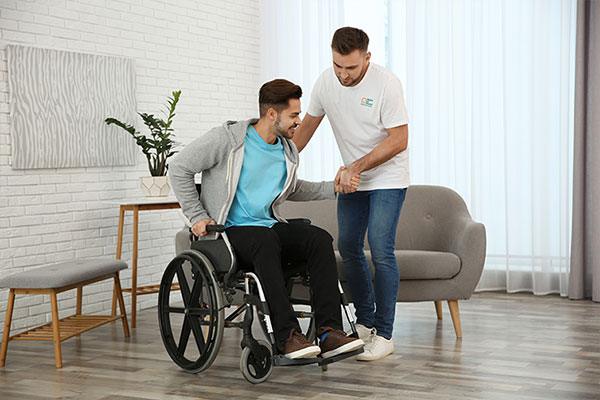
    • Spinal Cord Injuries (Quadriplegia, Paraplegia): Safe assistance with transfers, showering, toileting, and mobility using adaptive equipment.
    • Severe Cerebral Palsy: Full physical assistance for feeding, positioning, and personal care, with a focus on comfort and mobility.
    • Muscular Dystrophy: Ongoing mobility and strength support, assistance with daily activities, and adaptive home solutions for independence.
    • Severe Multiple Sclerosis: Support for fatigue management, mobility, personal care routines, and energy-conservation strategies.


  • Are you ready to build your confidence, and achieve a sense of empowerment over your life?

    Then chat to our team of NDIS registered disability support service providers today. We are here to help you reach your goals for increased independence.

Contact NDIS Support Services Provider

FAQs

What are Specialised NDIS Disability Support Services?

These are tailored supports for participants with complex physical, intellectual, or psychosocial disabilities, focusing on independence and improved quality of life.

Who can access these supports?

Any NDIS participant with significant mobility or high-intensity care needs, such as those with spinal cord injuries or neurological conditions, can access specialised support.

What services are included?

Support may include personal care, mobility assistance, medication management, allied health coordination, and community participation.

How are these supports different from standard NDIS services?

Specialised services provide higher levels of care and expertise, delivered by trained professionals to meet complex individual needs.

Contact Us

Contact Us
img
Quick Enquiry WhatsApp