Local NDIS Support Coordinator in Perth: How to Change or Switch Them?
Oct 27, 2026
Previous Post

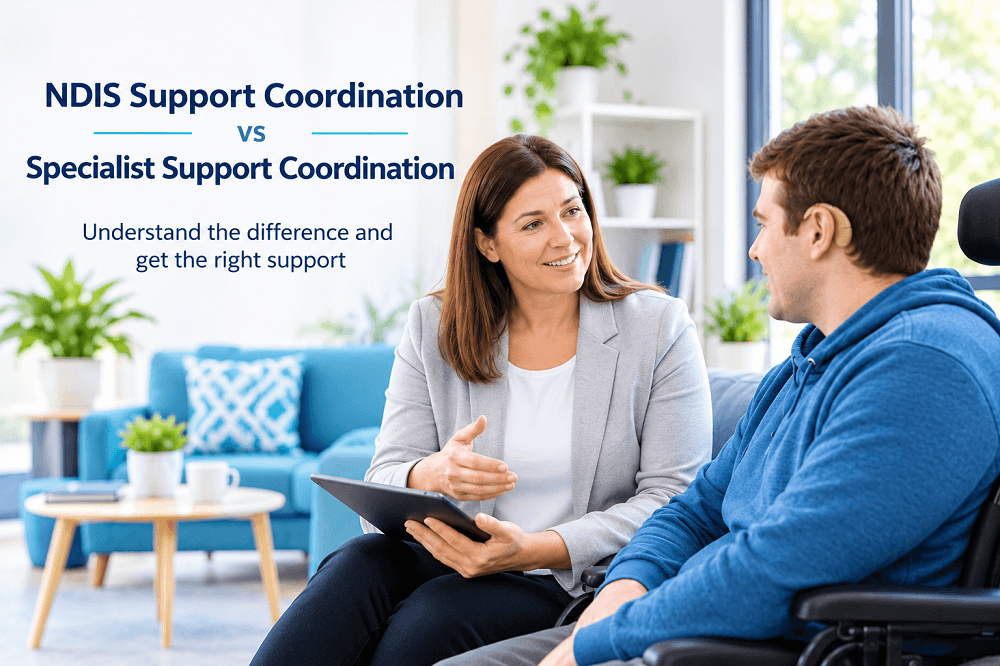
It can feel confusing or overwhelming when navigating an NDIS plan, especially when there are different types of support available. But the right kind of support can make a significant difference. Two key supports that are often misunderstood are NDIS support coordination and NDIS specialist support coordination in Perth.
While they sound similar, they serve distinct purposes and are personalised to suit different needs. Understanding the difference between the two can help you get the right level of support and make the most of your NDIS plan.
So, to help you make an informed decision, this blog explains how Level 3 coordination is different from Level 2.
NDIS support coordination (Level 2) is a funded capacity-building support designed to help participants understand, implement, and make the best use of their NDIS plan to reach their personal goals.
The coordinator helps connect with local providers, establish service agreements, and build the confidence needed to manage their own supports independently.
NDIS specialist support coordination (Level 3) is a high-level and intensive form of support coordination that is designed for participants facing complex, volatile, or high-risk situations.
A specialist coordinator reduces critical barriers, manages immediate crises, and coordinates specialised medical, behavioral, or justice services to ensure safety and continuous care delivery.
The main difference between the two is that support coordination (Level 2) focuses on building your independence to manage everyday NDIS plans, whereas specialist support coordination (Level 3) delivers expert crisis management to resolve acute risks and complex system barriers. Other key differences include:
| Feature | Support Coordination
(Level 2) |
Specialist Support Coordination (Level 3) |
| Primary Goal | Build capacity to understand your plan, connect with mainstream services, and mix supports independently. | Reduce complex barriers, manage volatility in your environment, and ensure continuous service delivery. |
| Provider Role | Guides you to navigate frameworks and manage service agreements. | Intervenes directly to resolve complex medical, housing, or justice issues. |
| Qualifications | General experience in disability navigation, plan tracking, and community connection. | Highly qualified professionals, often with backgrounds in allied health, psychology, or social work. |
| Approach | Ongoing coaching, guidance, and setting up service agreements. | Crisis management, intensive risk assessment, and systemic conflict resolution. |
The NDIS funds specialist support coordination (Level 3) only when exceptional barriers place a participant’s safety or housing stability at immediate risk:
Choosing the right support depends entirely on the stability of your current care environment. Review your current lifestyle complexities to determine which funded support will best protect your long-term well-being.
Neither level is inherently better because they serve entirely different needs. Level 2 builds everyday plan independence, while Level 3 manages complex needs.
No, the NDIA decides your funding level, but you can request a review or provide evidence if you think you need a higher level.
You may need specialist support coordination (Level 3) if you or a family member face complex, high-risk, or multi-system challenges that regular support coordination cannot safely handle.
Yes, you can have both Level 2 and Level 3 coordination funded in the same NDIS plan. However, it is uncommon and requires specific justification.